Sinus
Home › Exercise For › Sinus
Sinus
Sinus
There is nothing worse than pain or discomfort in one's head. If you suffer from sinus issues, you are probably aware of the importance of addressing them at the very first warning sign. Paying attention to, and honouring your body are essential in yoga class, and it is just as important to carry this practice into your daily life. A dull headache, plugged ears, fatigue, and of course the sniffles are all warning signs of sinus issues. I have personally found that there are a few practices that, when put together, have been quite effective at keeping things in balance.
Jal Neti Pots
A small pot is filled with a lukewarm saline solution, and then it is poured into one nostril and drains out the other side. The water gently cleanses the sinus cavities, removing mucous and relieving congestion, post-nasal drip and sinus discomfort. If you have never tried a neti pot, and you've had sinus issues or allergies in the past, I'm telling you here, you have got to try one! It is not as uncomfortable as you think, and over time you'll wonder why you hadn't tried it earlier.
Exercises
Any physical movement when you're under the weather is going to encourage the lymph to move along and do its job, getting you feeling healthy again. Even if it's just a few neck and shoulder stretches, it's better than doing nothing.
For sinuses though, more specifically, it is inversions that can really help to get things loosened up and moving. These poses will intensify the pressure in your head, but when you right yourself, you should feel some relief shortly after. Give it time, and be open-minded. Positive energy is one behaviour that I feel can prevent one from getting sick, and heal a person when they do succumb to illness. Do each pose for about one minute. Allow yourself to relax into the pose and try to keep your breath as smooth and steady as possible.
If you have not tried these poses before, I highly recommend you get assistance from Instructor. It is very important to warm the body thoroughly before attempting advanced inversions.
Breathing Exercises
Breathing Exercises: Though it may seem counter-intuitive, breathing is another practice that can alleviate sinus discomfort. Try the following practices with a calm and relaxed demeanor, focusing on keeping your prana moving smoothly. You may wish to blow your nose, or better yet, use your neti pot before you try these exercises.
Belly Breathing: Lie on your back with your knees bent and your hands on your belly. Breathe deeply into the belly, focusing on expanding the belly, then draw the breath and energy up through your ribs, chest and shoulders. Exhale the same way, deflating your belly, chest and shoulders, and squeezing all the air out of your belly. Find your own rhythm.
Calming Breath: Sit comfortably. Bring your right hand out in front of you, palm facing you. Fold your index and middle fingers into the palm. Place your ring finger on your left nostril to close it off. Breathe into the right nostril for two counts. Close off the right nostril with the thumb and hold the breath for two counts. Release the left nostril, exhale for two counts. Close off the left nostril and hold the breath for two counts. Try visualizing a square. If it feels uncomfortable to hold the breath, simply pause instead. Increase the count as you become comfortable, making sure that you are doing equal counts for each action.
Breath of Fire: In this practice, hold your hand over your navel, and practice forcefully exhaling out the nose repeatedly. Your belly should be pumping in and out. The force of the exhale will naturally draw in a new breath, so there is no need to inhale consciously. You may start this practice by gently panting, but it is important to eventually speed up the pace of this breath in order to stoke the "fire" of the breath.
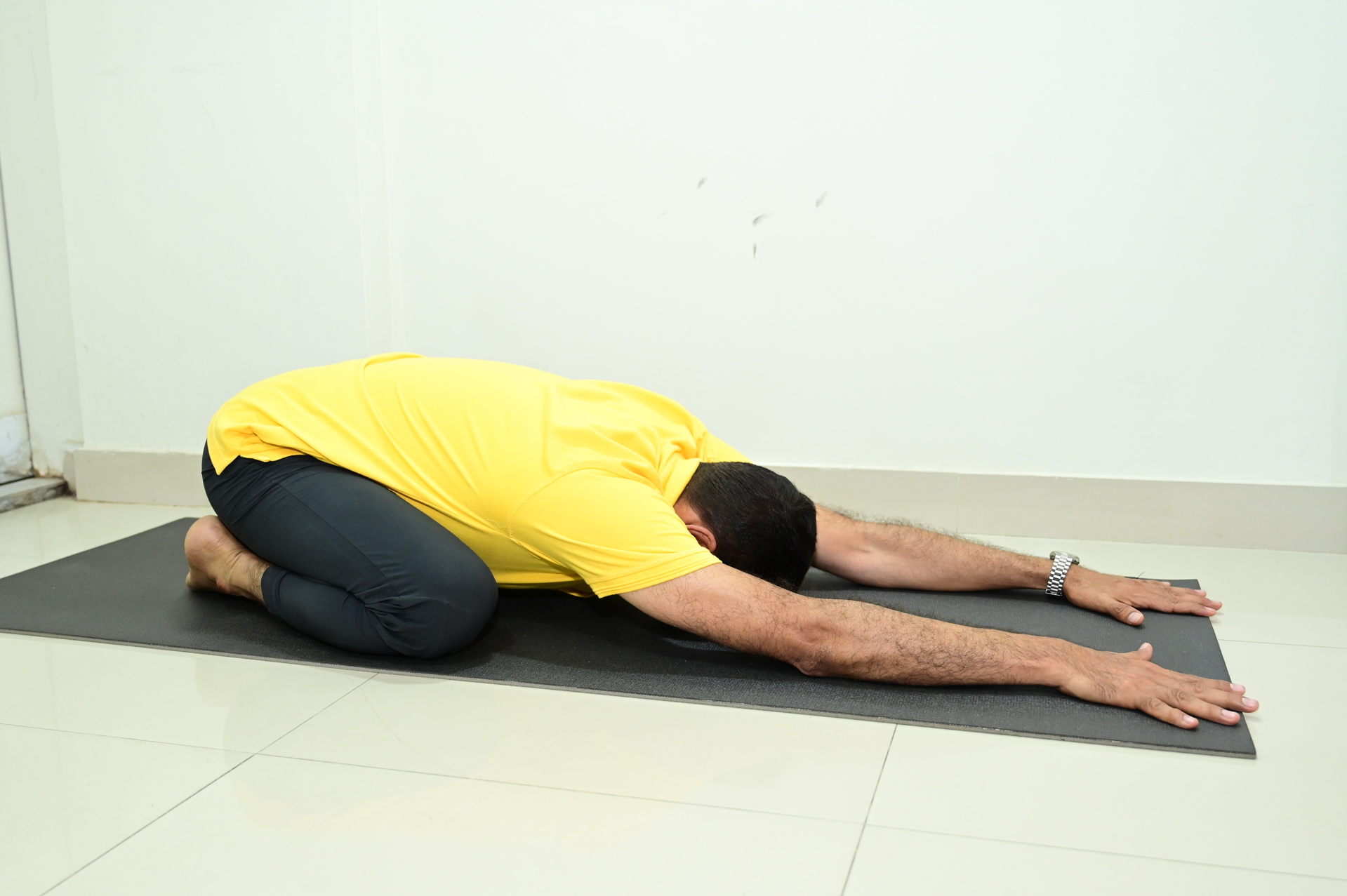
Child's Pose
For sinuses, inversions can really help to get things loosened up and moving. These poses will intensify the pressure in your head, but when you right yourself, you should feel some relief shortly after.
- Kneel on the floor. Touch your big toes together and sit on your heels, then separate your knees about as wide as your hips.
- Exhale and lay your torso down between your thighs. Broaden your sacrum across the back of your pelvis and narrow your hip points toward the navel. Lengthen your tailbone away from the back of the pelvis while you lift the base of your skull away from the back of your neck.
- Lay your hands on the floor alongside your torso, palms up, and release the fronts of your shoulders toward the floor. Feel how the weight of the front shoulders pulls the shoulder blades wide across your back.
- Stay anywhere from 30 seconds to a few minutes. To come up, first lengthen the front torso, and then with an inhalation lift from the tailbone as it presses down and into the pelvis.
Benefits: Releases tension in back, shoulders, chest. Recommended for dizziness or fatigue. Helps alleviate stress and anxiety. Flexes internal organs and keeps them supple. Lengthens and stretches spine. Relieves neck and lower back pain. Gently stretches hips, thighs, ankles. Normalizes circulation. Calms mind and body. Encourages strong, steady breathing.
Downward Facing Dog
- From all fours (on your hands and knees) firm your hands down, fingers spread, base of index finger grounded.
- Keep your upper arms and shoulders rotated outwards while your forearms rotate in.
- On an exhalation, push the floor away from you, lift your hips and push yourself back into the down dog pose, an upside down V pose.
- Keep your knees initially bent to lengthen the spine, taking the hips up and away from you. Then if possible straighten the legs, while maintaining the length in the spine.
- Press upper arms towards each other, shoulder blades down along the spine, but keeping the space across the tops of the shoulders.
Hold for 30 seconds to 1 minute with smooth steady breathing.
Benefits: Strengthens upper body, arms, shoulders, chest and legs. Stretches chest and shoulders. Extends the entire posterior chain including ankles, calves, hamstrings and spine. Promotes mental calmness. Generates overall body vitality. Stimulates blood circulation and helps drain the sinuses.

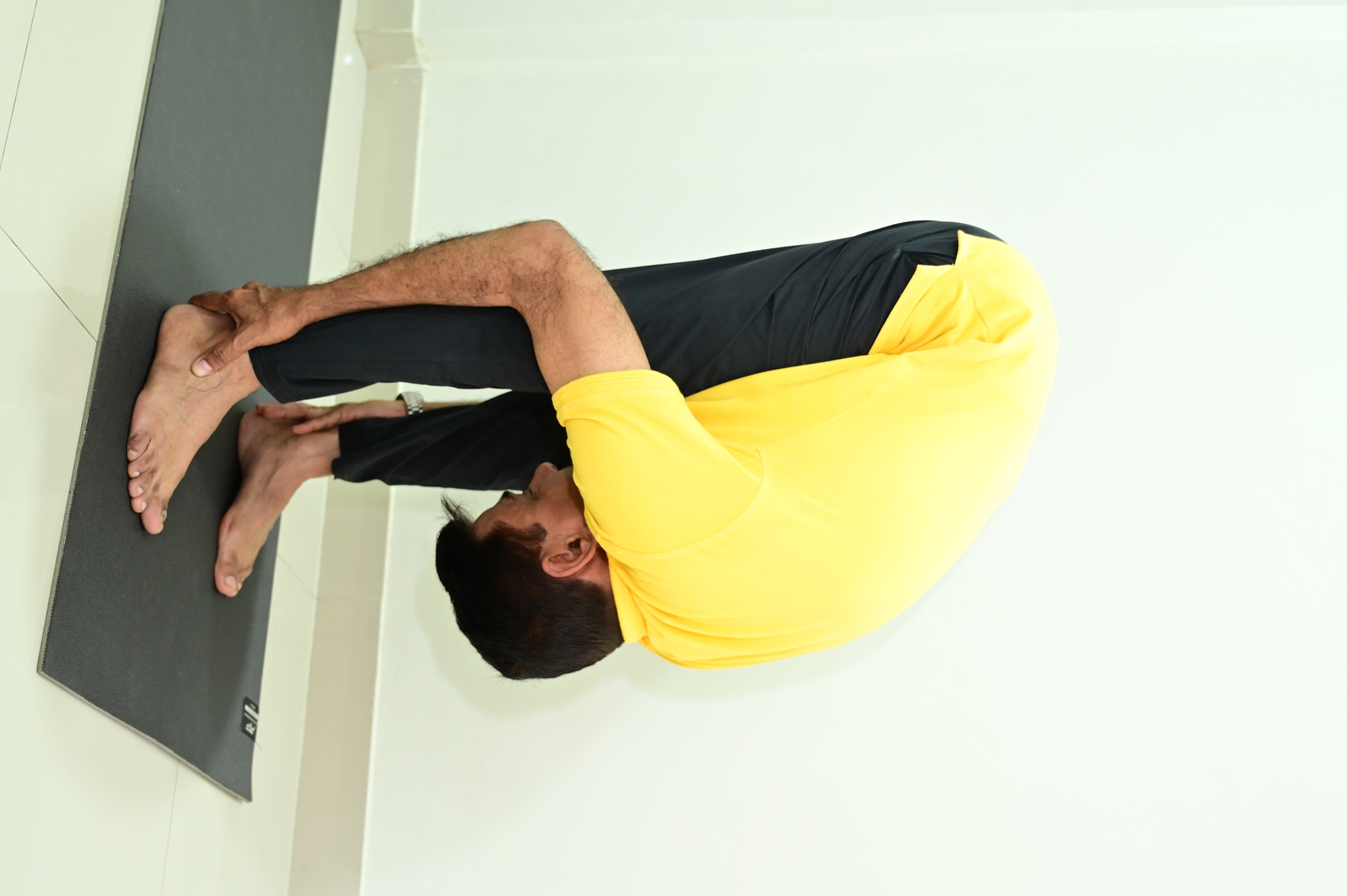
Standing Forward Fold
- Stand straight with feet together and arms alongside the body.
- Balance your weight equally on both feet.
- Breathing in, extend your arms overhead.
- Breathing out, bend forward and down towards the feet.
- Stay in the posture for 20-30 seconds and continue to breathe deeply.
- Keep the legs and spine erect; hands rest either on the floor, beside the feet or on the legs.
- On the out breath, move the chest towards the knees; lift the hips and tailbone higher; press the heels down; let the head relax and move it gently towards the feet.
- Breathing in, stretch your arms forward and up, slowly come up to the standing position.
- Breathing out, bring the arms to the sides.
Benefits: Stretches all the muscles of the back. Invigorates the nervous system by increasing blood supply. Makes the spine supple. Tones the abdominal organs. When you right yourself, the sinuses drain providing relief.
Precaution: People suffering from lower back injuries, spondylitis, cervical pain or any kind of back and spinal problems should not do this pose.
Rabbit Pose
Sit in Diamond pose. Hold the heels with your hands. Thumbs should be inside the leg facing each other. Slowly bend the body forward and place the crown of the head on the floor between the knees. Hold the heels tight and raise the hips up. Try to move the body forward as much as possible. Hold the position and count 5 with normal breathing. Return to normal position. Do the asana 2 times. Then take rest in Corpse pose.
Benefits: Maximizes blood flow to the head and sinuses. Stimulates the immune system and helps clear sinus passages. Also stimulates the thyroid gland which helps regulate metabolism.


Shoulder Stand
- Lie down straight on your back. Keep the feet together, place the hands along the body with the palms touching the ground.
- Inhale and raise the legs slowly upwards to 30 degrees then 60 degrees and finally 90 degrees. Take the help of your hands while lifting the legs. If the legs cannot be kept straight at 90 degrees take them ahead to 120 degrees with the hands supporting the back. The elbows should rest on the ground and the toes joined and straight. Keep the eyes closed or gaze fixed on the toes. Starting with about 2 minutes, the duration can be extended slowly up to half an hour.
- Bend the legs slightly backwards before returning to the normal position. Remove both the hands from the back and place them straight on the ground. Now regain the original position slowly in the reverse order, while keeping the palms pressed on the floor. Take rest in Corpse pose for approximately the same time as used for shoulder stand. The reverse/complimentary of this exercise is Fish pose. Therefore, performing this before Corpse pose is more beneficial.
Precautions:
- Those who have pain in the ears or there is secretion from ears should not perform this exercise.
- If there is shortsightedness or if the eyes are unduly red, then do not perform this.
- Those suffering from heart diseases, high blood pressure and back pain should not perform this.
- Do not do this immediately after doing any heavy exercise. The body temperature should be normal while performing this.
- Do not do this if suffering from cold and coryza.
Plow Pose
- Lie on your back with your arms beside you, palms downwards.
- As you inhale, use your abdominal muscles to lift your feet off the floor, raising your legs vertically at a 90 degree angle.
- Continue to breathe normally and supporting your hips and back with your hands, lift them off the ground.
- Allow your legs to sweep in a 180 degree angle over your head till your toes touch the floor. Your back should be perpendicular to the floor. This may be difficult initially, but make an attempt for a few seconds. Tip: Do this slowly and gently. Ensure that you do not strain your neck or push it into the ground.
- Hold this pose and let your body relax more and more with each steady breath.
- After about a minute (a few seconds for beginners) of resting in this pose, you may gently bring your legs down on exhalation. Tip: Avoid jerking your body while bringing the legs down.
- Plow Pose usually follows Shoulder Stand, and could also be followed by Cobra Pose and gently rocking the body in Wind-Relieving Pose.
Benefits:
- Strengthens and opens up the neck, shoulders, abs and back muscles
- Calms the nervous system, reduces stress and fatigue
- Tones the legs
- Stimulates the thyroid gland, strengthens the immune system
- Helps women during menopause
Precautions:
- Avoid practicing Plow Pose if you have injured your neck, suffering from diarrhea and high blood pressure.
- Ladies should avoid practicing Plow Pose during pregnancy and during the first two days of the menstrual cycle.
- Consult a doctor before practicing Plow Pose if you have suffered from chronic diseases or spinal disorders in the recent past.

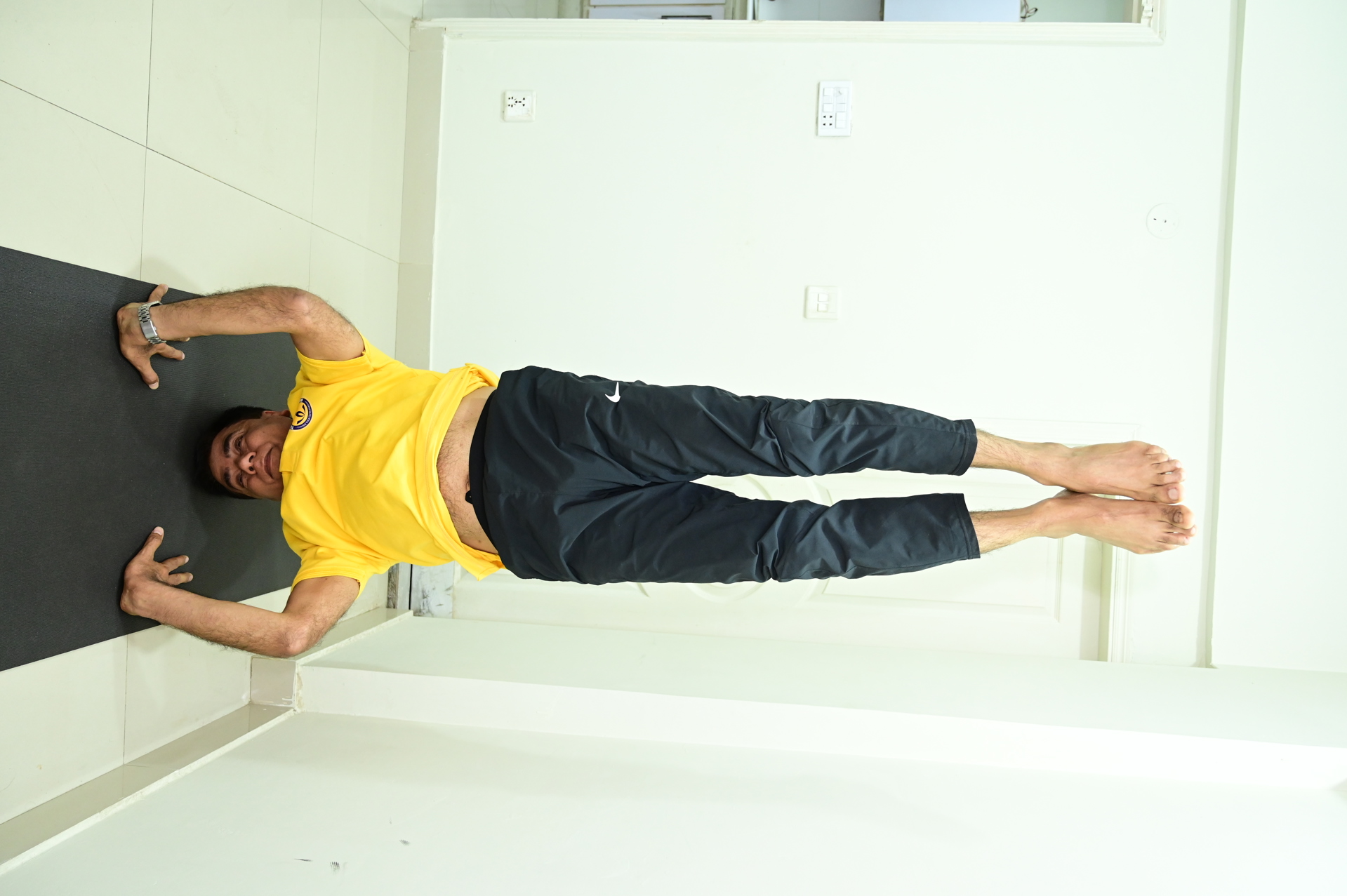
Head Stand
- Make a cushion out of a long cloth. Interlock the fingers of both the hands and rest the hands up to elbows on the ground. Keep the cushion in between the hands.
- The front portion of the head should rest on the cushion and knees should rest on the ground. Now controlling the body weight on the neck and elbows, straighten the legs to the ground level.
- Now while bending one knee, lift it straight, after this lift the second leg and bend up to the knee.
- Now one by one try to lift the legs, do not hurry in the beginning. Slowly the legs will be straight. When the legs are straight, then in the beginning join them and bend them slightly forward otherwise there is a chance of falling backwards.
- Keep the eyes closed and breathe normally.
- Follow the same steps in the reverse order to come back to the original position. Stand up straight after head stand, so that the blood circulation which flowed towards the brain becomes normal.
Time: In the beginning do this exercise for 15 seconds and slowly extend it to 30 minutes. In case you wish to practice it for a longer time you should do it under the supervision of an expert. In normal conditions it is sufficient to do it for 5 to 10 minutes.
Benefits:
- This is the king of all exercises. This provides pure blood to the brain, which makes the eyes, the ears, nose etc., disease free. It makes the pituitary and pineal glands healthy and activates the brain. It increases memory, sharpness and concentration.
- It activates the digestive system, stomach, intestines, and liver and increases the digestive power of the stomach. Inflammation and enlargement of the intestines, hernia, hysteria, hydrocele, constipation and varicose veins, etc. are cured by its practice.
- It activates the thyroid gland and reduces both obesity and weakness because both these diseases are due to the irregular functioning of the thyroid gland.
- It activates thyroid gland and establishes celibacy. It cures night-fall, gonorrhea, impotency and infertility, etc. It increases the glow and vitality on the face.
- Untimely falling of hair, and premature graying of the hair are cured by its practice.
Precautions:
- Those who have pain in the ears or there is secretion from ears should not perform this exercise.
- If there is shortsightedness or if the eyes are unduly red, then do not perform this.
- Those suffering from heart diseases, high blood pressure and back pain should not perform this.
- Do not do this immediately after doing any heavy exercise. The body temperature should be normal while performing this.
- Do not do this if suffering from cold and coryza.
Belly Breathing
Though it may seem counter-intuitive, breathing exercises are a powerful practice that can alleviate sinus discomfort. You may wish to blow your nose or use a neti pot before you try these exercises.
Lie on your back with your knees bent and your hands on your belly. Breathe deeply into the belly, focusing on expanding the belly, then draw the breath and energy up through your ribs, chest and shoulders. Exhale the same way, deflating your belly, chest and shoulders, and squeezing all the air out of your belly. Find your own rhythm. Practice for 3-5 minutes.
Benefits: Deep belly breathing activates the parasympathetic nervous system, promoting relaxation and reducing inflammation in the sinus passages. It helps to loosen mucus and improve breathing.

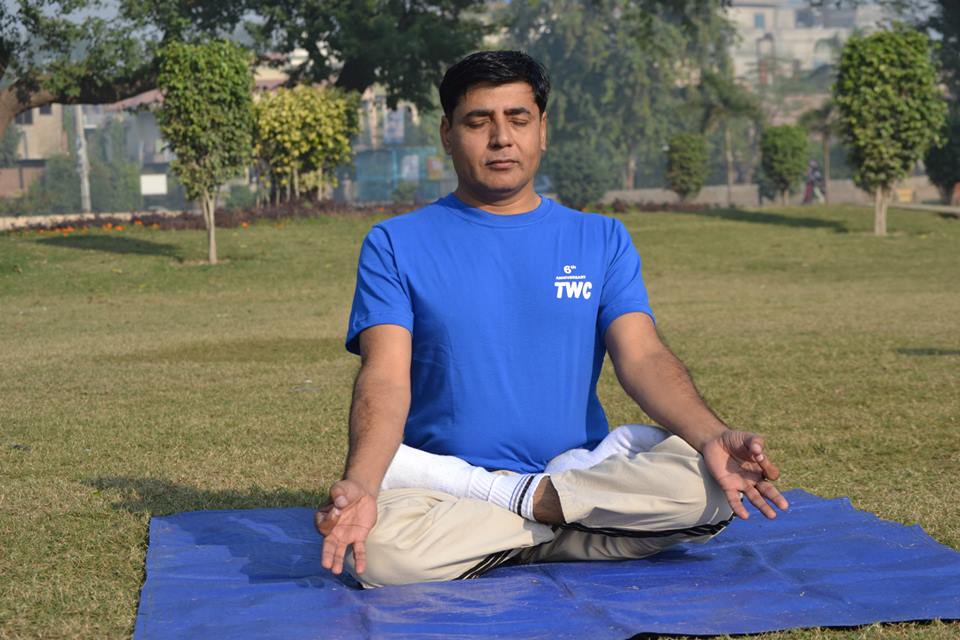
Calming Breath
Sit comfortably. Bring your right hand out in front of you, palm facing you. Fold your index and middle fingers into the palm. Place your ring finger on your left nostril to close it off. Breathe into the right nostril for two counts. Close off the right nostril with the thumb and hold the breath for two counts. Release the left nostril, exhale for two counts. Close off the left nostril and hold the breath for two counts. Increase the count as you become comfortable, making sure that you are doing equal counts for each action. Practice for 3-5 minutes.
Benefits: Balances the flow of air through both nostrils, helping to clear blocked sinus passages. Calms the mind and reduces stress which can worsen sinus symptoms.
Breath of Fire
Sit in Easy pose. Hold your hand over your navel, and practice forcefully exhaling out the nose repeatedly. Your belly should be pumping in and out. The force of the exhale will naturally draw in a new breath, so there is no need to inhale consciously. Start slowly and it is important to eventually speed up the pace of this breath in order to stoke the fire of the breath. Practice for 1-2 minutes.
Caution: This is a powerful breathing technique. Stop if you feel dizzy. Not recommended during pregnancy or for those with high blood pressure.
Benefits: Rapidly clears the nasal passages and sinuses. Increases lung capacity and oxygen in the blood. Energizes the body and boosts the immune system.